
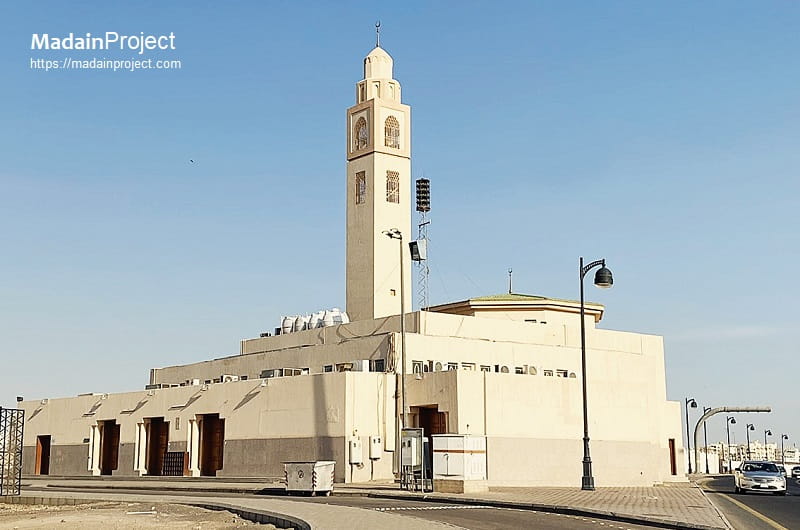
The Masjid Ijabah (Arabic: مسجد الإجابة), also rendered as Masjid al-Ijābah or Ejabah, was a historic mosque located to the north-east of Masjid Nabawi in Medina, present-day Saudi Arabia. The term ijābah literally means “response” or “acceptance”, and the name of the mosque derives from a well-known prophetic tradition stating that supplications made by the Prophet Muhammad at this location were granted by Allah. Because of its association with that report, the mosque also came to be linked with the memory of the Prophet’s prayer during a stop in the quarter historically inhabited by the clan of Banū Muʿāwiyah of the Aws tribe. There's another mosque with the same name, Masjid al-Ijabah, in the historic city of Mecca.
The structure stood approximately 600 metres to the north-east of the Prophet’s Mosque and roughly 380 north of the cemetery of Jannat al-Baqi. Classical sources frequently refer to it as Masjid Banī Muʿāwiyah, reflecting the name of the local clan and neighbourhood in which the site was situated. The mosque remained known in the historical topography of Madinah for centuries before undergoing multiple phases of deterioration and restoration. In late 2025 CE the standing structure was demolished during the large-scale redevelopment of the eastern and north-eastern environs of the Prophet’s Mosque. At present it remains uncertain whether the demolition was undertaken as a preliminary stage for reconstruction or as part of a broader removal of older auxiliary structures in the vicinity.
Masjid Ijābah occupied a modest but historically significant position within the sacred landscape surrounding the Prophet’s Mosque. Its importance derived less from architectural scale than from the prophetic narrative associated with the site. Early Islamic tradition records that the Prophet paused here while returning from the elevated area of al-ʿĀliyah on the outskirts of Medina and performed two Raka'a of prayer. During this pause he made a prolonged supplication concerning the future condition of his Ummah. According to transmitted reports, two of the three supplications were accepted while the third was withheld.
The episode is preserved in canonical Sahih hadith collections and was widely cited by later scholars as evidence both of the Prophet’s concern for the welfare of the Muslim community and of the divine acceptance (ijābah) that gave the mosque its later name. Because of this association the site acquired a place in the devotional geography of Medina, alongside other locations remembered as places where the Prophet prayed or paused during journeys in the region. Medieval scholars of Medinan topography frequently listed it among the historically attested musallāyāt or prayer sites connected with the Prophet’s movements around the city.
Although never a large congregational mosque, the building continued to be recognised across many centuries of historical writing. Authors concerned with the history and geography of Medina repeatedly mentioned it when describing the distribution of early neighbourhoods belonging to the Aws and Khazraj tribes and when documenting the physical remains of prophetic prayer sites outside the main sanctuary.
circa 620 CE- Present
The mosque today known as Masjid al-Ijābah was situated in a district historically associated with the houses of Banū Muʿāwiyah, a clan of the Aws tribe among the Anṣār of Medina. The neighbourhood derived its name from Muʿāwiyah ibn Mālik ibn ʿAwf, who belonged to a Qaḥṭānī lineage whose descendants were settled in this part of ancient Yathrib. Early reports indicate that the land upon which the mosque later stood originally belonged to a pre-Islamic notable member of this clan. To the south of this locality lay the quarter of Banū Ẓafar, illustrating the tribal distribution that characterised the urban fabric of Medina during the first century Hijrī (circa seventh century CE).
The earliest historical association of the site dates to the lifetime of the Prophet Muhammad. According to a well-known report preserved in the Ṣaḥīḥ of Muslim ibn al-Hajjaj, transmitted on the authority of Sa'd ibn Abi Waqas, the Prophet stopped in the quarter of Banū Muʿāwiyah while returning from the elevated district of al-ʿĀliyah on the outskirts of the city. At this location he performed two rakʿahs of prayer and then engaged in an extended supplication. After completing his supplication, he informed his companions that he had asked his Lord for three matters concerning his community. The first request was that the community should not be destroyed through famine, and this was granted. The second was that it should not be destroyed through drowning, which was likewise granted. The third request—that internal conflict should not arise among members of the community, or according to another transmitted wording that an external enemy should never prevail over them—was not granted.
This incident became the basis for the later designation of the site as Masjid al-Ijābah, meaning “the mosque of response” or “acceptance”, in reference to the belief that two of the Prophet’s supplications were granted at this location. The narration circulated widely in the hadith tradition and was later cited by scholars as an indication of the divine response associated with the Prophet’s supplication.
Evidence that the site was already recognised as a place connected with the Prophet’s prayer during the earliest generations of Islam appears in the transmission preserved by Malik ibn Anas in al-Muwaṭṭaʾ. The report is narrated through the Medinan successor ʿAbd Allāh ibn ʿAbd Allāh ibn Jābir ibn ʿAtīq, who relates that Abdullah ibn Umar once came to the houses of Banū Muʿāwiyah and asked the residents whether they knew the precise place where the Prophet had prayed there. ʿAbd Allāh ibn ʿAbd Allāh indicated a corner within the mosque and affirmed that this was the location. Ibn ʿUmar then inquired about the narration concerning the three supplications, and when it was related to him he confirmed its accuracy and declared that the account was correct. This report demonstrates that companions of the Prophet themselves took an active interest in identifying and preserving the locations associated with his acts of prayer in Medina.
The broader attention given to such locations among the earliest generations is continuously reflected in the hadith literature compiled during the third century Hijrī (circa ninth century CE) was already recognised in the historical literature devoted to the topography of Medina. In his Ṣaḥīḥ, Muhammad al-Bukhari devoted an entire chapter to the mosques and prayer places situated along the roads of Medina where the Prophet had prayed. Within that chapter he transmitted a report from Mūsā ibn ʿUqbah describing how Sālim ibn ʿAbd Allāh ibn ʿUmar deliberately sought out specific locations in order to pray where the Prophet had prayed. Sālim explained that he had observed his father, Ibn ʿUmar, doing the same. These reports illustrate the early Medinan practice of preserving the memory of prophetic musallāyāt, among which the site later known as Masjid al-Ijābah was included.
Furthermore, another Medinan historian Ibn Shabbah, a prominent Basran historian, traditionist, and poet, included it in his work Akhbār al-Madīnah, where he enumerated the mosques and prayer sites associated with the Prophet. The inclusion of the site in this early historical survey indicates that a structure commemorating the prophetic event was already known at the location by that period.
During the fifth century Hijrī (circa eleventh century CE), the Andalusian scholar Ibn Abd al-Barr discussed the narration of the three supplications in his work al-Tamhīd, drawing attention to the theological implications of the report and regarding it as an indication of the Prophet’s distinctive status and the divine care granted to his Ummah. Although his discussion focused primarily on the meaning and significance of the hadith itself rather than on the physical structure of the mosque, it illustrates the continued circulation and interpretation of the tradition associated with the site.
References to the physical condition of the mosque appear only in later historical writings. The Arab scholar al-Mazari, in fifth and sixth century Hijri (circa 11th and 12th century CE) recorded that the mosque lay largely in ruins amid the abandoned houses of Banū Muʿāwiyah. Other authors of approximately the same period likewise remarked upon the dilapidated state of the structure, suggesting that the surrounding district had declined in habitation. In the seventh century Hijrī (circa thirteenth century CE), the historian Ibn al-Najjar mentioned the mosque in his Tārīkh al-Madīnah and observed that a portion of the structure had already collapsed during his time. By the eighth century Hijrī (circa fourteenth century CE), further accounts indicate continued deterioration.
A subsequent phase of restoration is recorded by the prominent Medinan historian Ali al-Samhudi in the ninth century Hijrī (circa fifteenth century CE). He noted that the mosque had been repaired and that it was once again used occasionally as a place of prayer. In the eleventh century Hijrī (circa seventeenth century CE), the traveller and scholar Abu Salim al-Ayyashi described the mosque as having been substantially rebuilt, consisting of a prayer area enclosed by four stone-and-mortar walls with a miḥrāb set into the qibla wall indicating the direction of prayer. This method and material of construction was common during the Ottoman Empire period and was used well in to the Saudi era as well. An example of such construction can be seen in the later Ottoman remains of Masjid Hudaibiya.
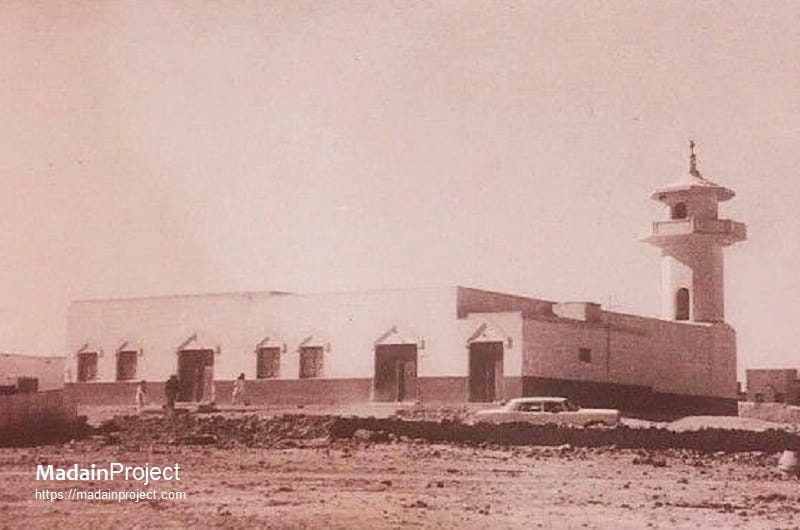
By the modern period the structure had again fallen into disrepair. The twentieth-century Medinan historian Abdul Quddus al-Ansari recorded that the mosque was largely collapsed and lay in ruins, although the remaining walls suggested construction from local stone bound with lime mortar, a building method typical of many Ottoman-period structures in Medina. Another account attributed to the Medinan historian Ibrāhīm al-ʿAyyāshī described the building as consisting of two sections, one containing the miḥrāb and another surmounted by a dome, though by that time only fragments of the structure remained standing.
During the twentieth century CE, following the establishment of Saudi administration in Medina, a small mosque was erected at the site under the supervision of the religious endowments authorities. A more extensive reconstruction was undertaken in 1418 Hijrī (circa 1997–1998 CE), when King Fahd ordered the rebuilding of the mosque. The reconstructed complex occupied an area of approximately one thousand square metres and included annexes, a designated prayer area for women, and additional service spaces associated with the mosque.
This mosque, however, was demolised in late 2025-early 2026 CE for renovations or reconstruction.
circa 650 CE
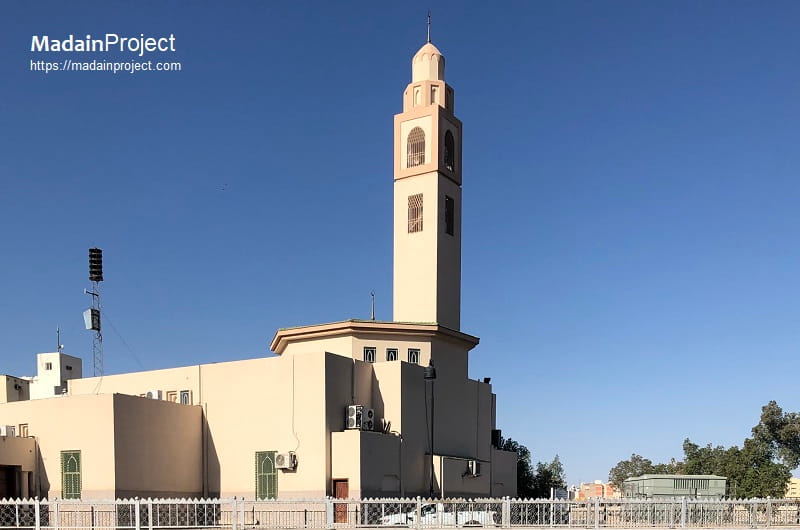
Exterior
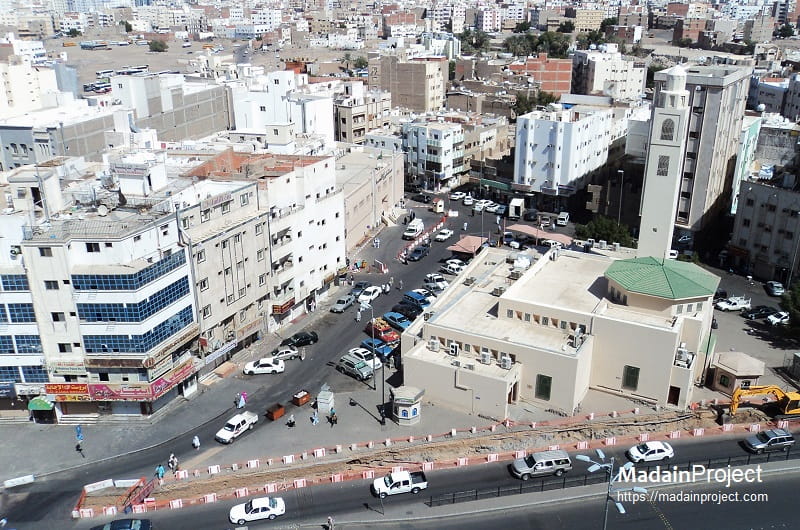
Before its demolition in 2025 CE, the modern Masjid Ijābah was a relatively small neighbourhood mosque whose design reflected the restrained architectural language commonly employed in many twentieth-century reconstructions of historic religious sites in Medina. The building occupied a modest rectangular footprint and was organised around a simple prayer hall oriented toward the qibla. Its exterior was finished in light-coloured plaster, producing the plain white appearance typical of many contemporary mosques in the city.
A single slender minaret rose above the structure, serving both as a visual marker of the mosque and as a functional element associated with the call to prayer. The mosque complex also incorporated annexed areas created during the late twentieth-century reconstruction, including additional prayer space and service facilities. While architecturally modest, the building’s significance derived primarily from its historical and textual associations rather than from elaborate design.
circa 650 CE
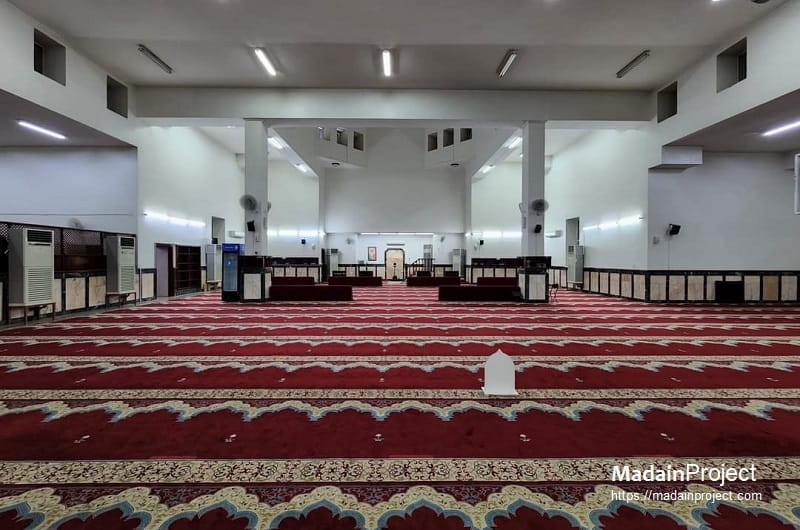
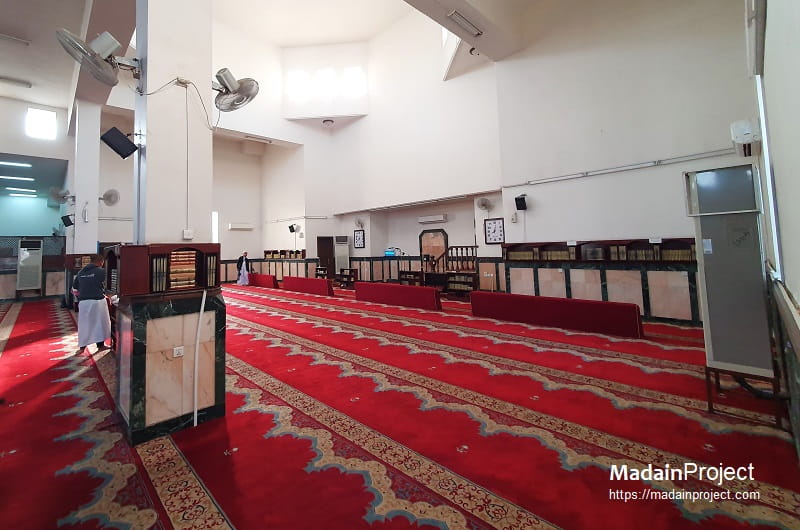
Interior
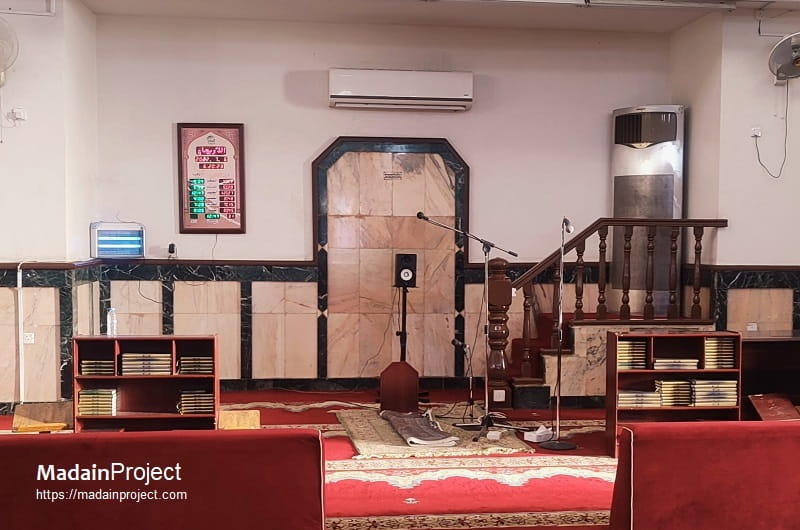
The prayer hall itself was largely undecorated. Interior surfaces were kept deliberately simple, with minimal ornamental treatment so that the focus remained on the act of prayer rather than on architectural display. A miḥrāb (inspect) set into the qibla wall indicated the direction of Mecca and marked the position from which the imam led the congregational prayer. During the modern period, this is one of the mosques that did not have the niched mihrab (mihrab mujawwaf), instead a simple tiled section marked the qibla direction in the southern wall. The structural system consisted primarily of reinforced masonry walls supporting a roofed prayer space, a practical solution consistent with the scale and function of the building.
circa 650 CE

The demolition of the standing structure in late 2025 CE occurred within the broader context of the continuing redevelopment and expansion of the precinct surrounding Al-Masjid an-Nabawi. In recent decades large sections of the northern and eastern districts adjacent to the sanctuary have undergone extensive restructuring in order to accommodate increased numbers of pilgrims and to reorganise urban infrastructure around the mosque complex.
At present, publicly available information does not clearly indicate whether the removal of Masjid Ijābah was intended as a temporary measure preceding a new reconstruction or as part of a permanent reconfiguration of the surrounding urban space. Given the historical recognition of the site in classical Medinan sources, future planning decisions may involve either the rebuilding of a mosque marking the traditional location or the integration of the area into the expanded architectural landscape of the Prophet’s Mosque.
For researchers examining the transformation of Medina’s historical topography, the case of Masjid Ijābah provides an instructive example of the tension between urban redevelopment and the preservation of minor but historically attested sacred sites. Further investigation of municipal planning documents, Saudi endowment records, and official announcements related to the redevelopment project may clarify the intended status of the site in the coming years.

Signup for our monthly newsletter / online magazine.
No spam, we promise.

The Madain Project is an online archive of Abrahamic History and Archaeology.
Abrahamic History & Archaeology is the study of history and archaeology with respect to the three Abrahamic Faiths without considering the religious and theological aspects. The goal of Abrahamic History is to understand how and why the religious doctrines and behaviours have evlovled and changed over time. Searching for patterns in the evolution of significant cultural events such as the development of farming, the emergence of cities, or the collapse of major civilizations for clues of why and how these have influenced the three major Abrahamic religions.
Cloud Drive -
About -
Help -
Privacy Policy -
Contact
Madain Project: Encyclopedia of Abrahamic History & Archaeology.
Copyright MadainProject 2017 - 2026.


